PRESIDENT and CO-FOUNDER
Kelly Ann Miller
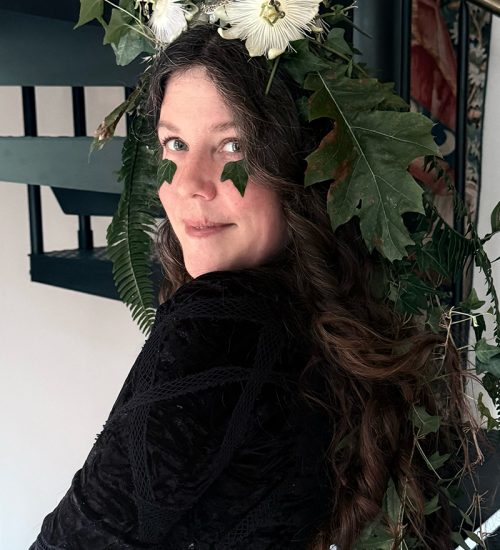
Kelly Ann Miller has been a passionate student of animal behavior since early childhood. In her youngest years, she was known to spend long hours crawling on the ground outdoors imitating bugs and caterpillars, trying to report what “expressions” they were making to anyone who would listen.
Her school years were filled with adventures shared with her many pets and the wild animal friends she made as a young girl camping for weeks in the remote Rocky Mountains with her dad. By third grade, when asked what she wanted to be when she grew up, she said she wanted to help animals. When asked if she meant becoming a veterinarian, she replied, “No, not just for the animals everyone thinks are cute, but for the other ones.” At that time, the term wildlife rehabilitator did not yet exist as a defined path for students.
Her adolescent and teenage years were filled with wildlife rescues, an almost constant activity. She took in baby birds and injured bunnies, reported neighborhood boys for hurting frogs or shooting at birds and squirrels, and was always patrolling and defending what she loved. Her compassion made her a target for bullying, but she never stopped protecting animals.
As a teenager, she rescued a baby raccoon and met her first professional wildlife rehabilitator, a woman in Boise, Idaho, who had created a natural habitat with a creek where raccoons could learn to hunt for crayfish. Kelly was fascinated and overjoyed for her young raccoon, Chiquita.
More birds followed, including crows, and each new encounter with wildlife in need led her to another learning experience or wildlife center. These chance encounters continued to guide her calling from a young age.
Motherhood came early, and she spent her twenties and thirties raising four children. During those years, she volunteered to support local wildlife rehabilitators in Oregon, where she had moved with her family. She began transporting injured and orphaned wildlife for Willamette Wildlife Rescue. Rita, the head of rehabilitation, noticed that animals seemed to “find” Kelly, and she quickly became a trusted handler for various species.
After Willamette Wildlife closed, Kelly continued transport work for Chintimini Wildlife Center, then the nearest facility to the Eugene area.During the pandemic, Kelly volunteered with The Squirrel Refuge in Vancouver, Washington, fostering babies and offering more than 1,200 hours of care for injured and orphaned squirrels. Under the guidance of licensed wildlife rehabilitator Michael Bacon, she gained more than two years of hands-on experience caring for one of her favorite animals, tree squirrels. Her work soon expanded to include ground squirrels and chipmunks and ultimately led her to the species she is now most passionate about protecting: the Western Gray Squirrel.
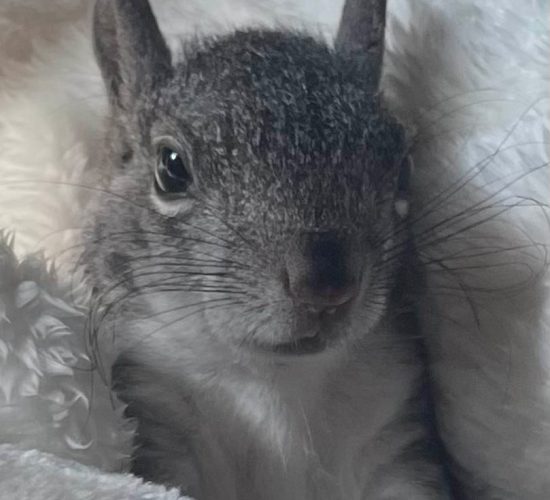
The Western Gray Squirrel (Sciurus griseus), native to the Pacific Northwest, is a sensitive species found nowhere else on Earth. It is a strictly arboreal squirrel whose ideal habitat includes mixed conifer and hardwood forests with continuous canopy and oak savannas of Oregon white oak (Quercus garryana) and California black oak (Quercus kelloggii). Unfortunately, both oak species have been severely depleted by the timber industry. There was once a deliberate attempt to drive the California black oak to extinction because the species was considered “useless,” and this slow-growing hardwood was viewed as an obstacle to fast-growing timber production. This near ecological genocide was halted in 1968 thanks to a concerned California activist who exposed the vital role these oaks play in forest ecosystems and their importance to both human and animal species for food and shelter in their natural habitat.
For Western Gray Squirrels, these native oaks were a primary food source and often important shelter long before settlers arrived and began clear-cutting their forests. The loss of oak woodland habitat, replaced by monocrop tree farms, is one of several factors driving their decline. The species is now listed as endangered in Washington and threatened in Oregon, yet Oregon still promotes sport hunting of this species, revealing a disturbing lack of conservation concern.
In Washington, one of the first conservation objectives stated for their recovery plan was to identify new suitable habitats where they may be introduced. Their current territories are fragmented, and inbreeding is a serious concern. The fragmentation is due in part to wildfires, another climate change threat that ties back to the removal of the oak woodlands. Kelly is now working on a conservation strategy for this shy and gentle native squirrel, which includes dedicated oak woodland protection and, where possible, restoration. Threatened by habitat loss, hunting, competition from non-native species, and the growing impacts of climate change and development on what once was their habitat, Kelly seeks to champion conservation and educational outreach for this rare and precious Oregon native tree squirrel.
The strategy would also include addressing the plight of non-native Oregon tree squirrels by funding research for fertility control for non-natives and establishing humane and non-lethal management of competing non-native squirrel populations. Currently, the non-native squirrels who live in every part of Oregon have zero protection and are subjected to an unethically cruel open season policy. The current narrative is that by denying these non-natives any care or protection, we are supporting the recovery of the native threatened Western Gray.
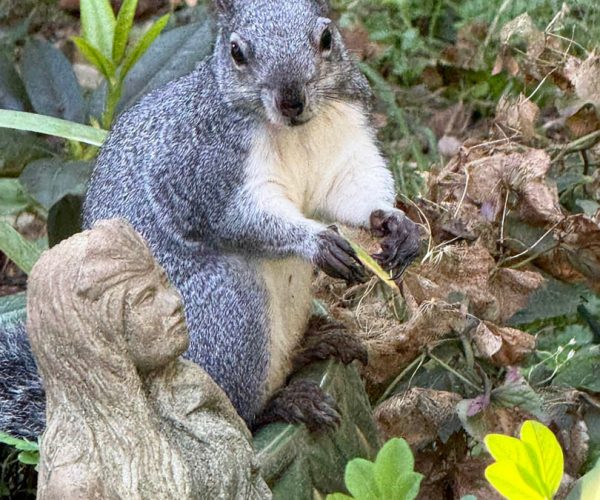
The non-natives breed twice a year and develop at a much faster rate than the Western Gray, which breeds only once per year, and whose young develop and disperse more slowly. The non-natives also have the advantage of being long adapted to surviving alongside humans, unlike the shy native silver squirrels of the far West. They clearly cannot compete. Some intervention to support the recovery of the native populations while humanely and ethically reducing the non-native populations is needed at this time. It is certainly not the fault of any other squirrel that our native silver squirrel is in decline. This sort of blindly accepted false narrative can lead to more cruelty and abuse toward innocent wildlife and should be corrected. It is humans who mismanaged the situation and caused the imbalance we now see. The innocent fox and eastern gray squirrels should not bear the brunt of human interference with their natural distribution. In decency and respect, we would be well served to address the imbalance we created and restore harmony.
After many years of assisting The Squirrel Refuge and serving as a resource for squirrel emergencies through Wildlife Warriors and other groups she has served, Kelly seeks to help reform legislation regarding protection and management policies for all tree squirrels in the state. She seeks to ban sport hunting of the now threatened Western Gray and raise funding for research and implementation of non-lethal fertility control methods for the non-natives as an alternative to the current mass euthanization of healthy squirrel babies required by every licensed rehabber or wildlife center in Oregon. She also seeks an alternative to the cruel, largely unregulated open season on fox and eastern gray squirrels, during which any weapon can be used at any time of year, even during baby season.
In the case of the eastern gray and fox squirrels of Oregon, these widely loved and highly intelligent tree squirrels were introduced to the state more than a century ago. They are the most commonly found orphaned baby squirrels in the state, and no children or families who find them and seek care want to hear that they are going to be killed. She has witnessed this compassion and care from the public for years and wants to mitigate the dissonance between wildlife management policies and the concern of the general public. Even the non-native squirrels enjoy some degree of protection in neighboring Washington and California. This must change in Oregon. There are ways.
To support the recovery of the Western Gray while ethically reducing populations of the non-natives, she dreams of establishing a dedicated center for rehabilitation, education, and sanctuary for the native Western Gray Squirrel. To foster a greater understanding of this shy and sensitive species, she has now spent the greater part of a decade studying their behavior, special needs, and natural biology in dedication to this conservation mission dear to her heart.
Since most of Kelly’s experience over many years was volunteering off the books and in private residences of home-care rehabilitators, in 2022 she began a year-long formal education through the federally accredited Animal Behavior Institute. By mid 2023 she had completed a six-course Wildlife Rehabilitation Professional Certification and currently holds certificates in Animal Training, Wildlife Management, Conservation and Education, Principles of Wildlife Rehabilitation, and Animal Health, Nutrition and Disease.
She hopes to use her lifelong experience to help compassionately conserve the unique and iconic native silver squirrel of the Pacific Northwest, a majestic species now facing grave threats and urgently in need of greater and ethical protection in her home state of Oregon and beyond.
Kelly is currently of service to her local community near Florence, Oregon, where she often assists in resolving human and wildlife conflicts and serves as a resource of guidance and support when wildlife emergencies emerge.
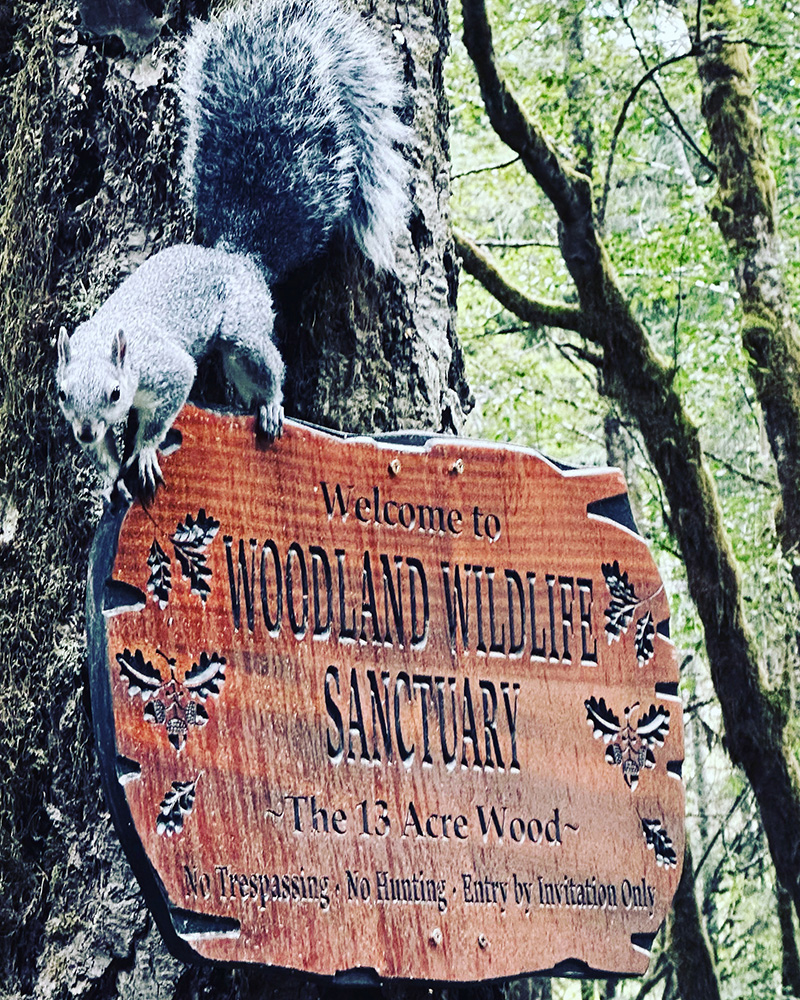
She lives on a 13 acre wildlife sanctuary and old-growth arboretum in the Siuslaw National Forest with her husband and many fur and feathered family members.
Support Our Movement
Every act of empathy makes a difference.
Join us as a volunteer, donor, or partner and help shape a world where animals are respected and protected.